
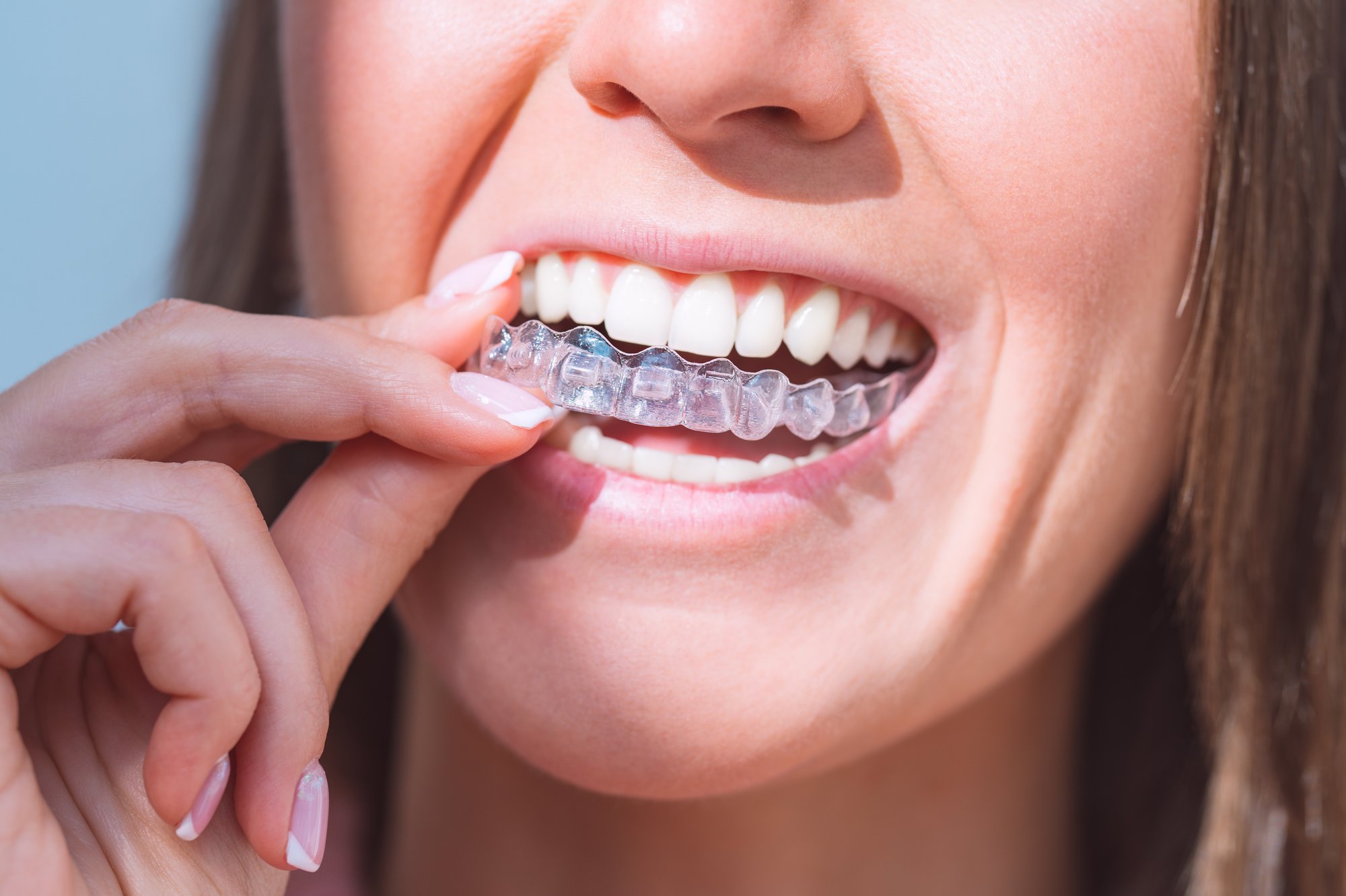
Past 40, Invisalign tends to win on discretion, while braces still handle the complex cases.
Thinking about straightening your teeth in your forties or beyond? The Invisalign vs. braces question comes up constantly among adults, and the honest answer leans on your smile and your daily life far more than your age. Invisalign works through a series of custom, see-through aligners that nudge teeth into place a little at a time, with no brackets and no wires. For grown-ups threading orthodontics through work, meetings, and a full social calendar, that low profile is a big piece of the appeal.
Key Takeaways
- Invisalign relies on clear, removable trays, while braces stay fixed to the teeth with brackets and wires.
- The aligners are barely noticeable and pop out when you need them to, which is a big part of their pull after 40.
- Braces give an orthodontist more control, so severe crowding or a tricky bite often calls for them.
- Because the trays come out, brushing and flossing stay simple, and that helps protect crowns, veneers, and older dental work.
- The right fit comes down to your case and your habits, and a dentist can talk you through it.
Invisalign vs. Braces: What’s the Real Difference?
Both move teeth, just by different routes. Drawing on ADA and NIH research, the University of Iowa College of Dentistry points out that braces give an orthodontist fine-grained control over the hard stuff, think heavy crowding or a bite that needs real correcting. Clear aligners earn their fans elsewhere, in how discreet they are and how easily they come off. Here’s the core split. Braces are glued on and working every hour of the day, with or without your attention. Invisalign only works while you’re actually wearing the trays, roughly twenty-two hours out of every twenty-four. Both are proven, and for a motivated adult, neither is a wrong turn. The real variable is you. Stay disciplined about the trays, and that freedom is a gift; forget them on the counter, and the glued-on option is the safer bet.
Why Do Many Adults Over 40 Lean Toward Invisalign?
Discretion usually tops the list, and it matters more as life gets busier. Aligners let you straighten up without a mouthful of metal, which counts for a lot in a boardroom or across a dinner table. They lift out for meals and cleaning too, so it’s easier to look after crowns, veneers, and the health of your gums. For mild-to-moderate cases, they’re often just the more comfortable call. Fewer chair-side visits. Less planning your month around adjustments. And when a big presentation or a night out rolls around, the trays come out for a while. That kind of flexibility lands differently once you’re past 40.
When Are Braces the Better Choice?
Braces still take the win in plenty of situations. Severe crowding, wide gaps, a genuinely complicated bite, that’s their home turf, and they manage it better than trays can. Since they’re bonded on, they don’t lean on your willpower to get the job done. For a more involved case, that constant, predictable force can actually shorten treatment and tighten up the result. Deep bites and stubborn crowding tend to need exactly that kind of steady push. When the problem is big, braces just carry more of the load.
Does Being Over 40 Change Anything?
Adult teeth shift just fine, so age alone is rarely the obstacle. What matters more is that by this stage you’re likelier to be carrying fillings, crowns, or a little gum recession. Healthy gums and solid bone are the actual prerequisite, which is why a thorough exam comes first. Once that foundation checks out, either path can work beautifully. There’s even a long-term bonus. Straighter teeth make it easier to brush and floss around, and cleaner teeth help protect gums that are aging right along with you.
How Do You Decide Between Them?
The call blends your goals, your bite, and your everyday routine. Want something discreet and flexible for a mild-to-moderate case? Invisalign usually comes out ahead. Dealing with something complex, or simply not thrilled about babysitting removable trays? Braces may be the better bet. A dentist can assess your teeth and lifestyle and steer you toward the right one. There’s no universal answer here. The best plan is the one you’ll actually follow through on, which means an honest look at your daily habits counts just as much as what your bite needs.
Choosing the Right Path to a Straighter Smile
So, in the Invisalign vs. braces debate after 40, which one wins? When the needs are mild to moderate, Invisalign tends to win out for comfort, discretion, and ease of upkeep, while braces remain the stronger pick for complicated cases. The real winner, though, is whichever option lines up with your bite, your goals, and your routine. Either way, you’re aiming at the same thing: a smile you feel good about.
- If you want to learn more about your options for a straighter smile, visit our Invisalign in Encinitas, CA, page or schedule a consultation.